Komainu at Omote-mon
Toshogu Shrine has four pairs of komainu (guardian dogs). Wooden komainu are located at the Omote-mon gate (the front gate) and the Yomeimon gate. The stone guardian dogs on the approach to the inner sanctuary are said to be the "oldest in eastern Japan." The cast-iron gate (Inuki-mon) is a masterpiece of Chinese bronze. There are five pairs of komainu, including the "leaping lion" attached to the stone fence in front of the Yomeimon Gate.
The first of these you will encounter are the komainu at the front gate.
This Omote-mon gate was originally called "Nio-mon" because it housed a pair of statues of Niko (a guardian deity) carved by Buddhist priest Hogen Kouon. However, due to the decree of separation of Shintoism and Buddhism issued by the new Meiji government (commonly called "Shintoism-Buddhism Separation"), it was deemed inappropriate to have a statue of a Buddhist guardian deity in a shrine, and in 1871 it was moved to a temple-style Taiyuin and this lion and guardian dog, which had been placed on the back side, were instead placed in the front.
On the back side where the lion and guardian dogs were placed, a bronze vase dedicated by the ninth Ryukyu King Chusan-Ou in 1644 was placed, and since then it has been called "Omote-mon (front gate)" instead of Nio-mon.
The statue of Niou was finally returned in 1897.
The wooden lions and komainu, which have returned to their original back seats, are painted vivid, and the "Un- statue" (statue with its mouth closed) has horns, in accordance with the
"lion komainu" style first established at court (the lion on the right, without horns, and the komainu on the left, with horns; the two are different creatures).
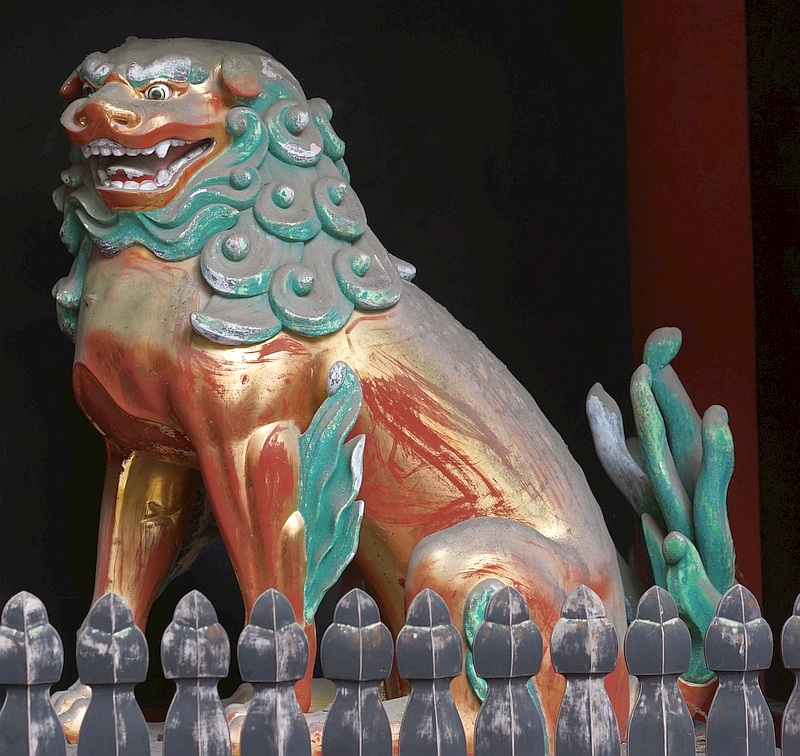
Komainu at Omote-mon, "A" statue
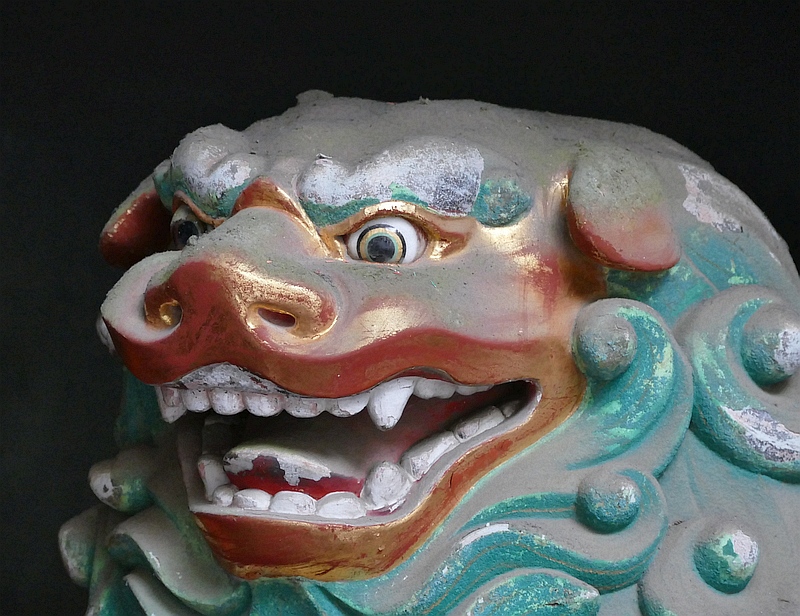
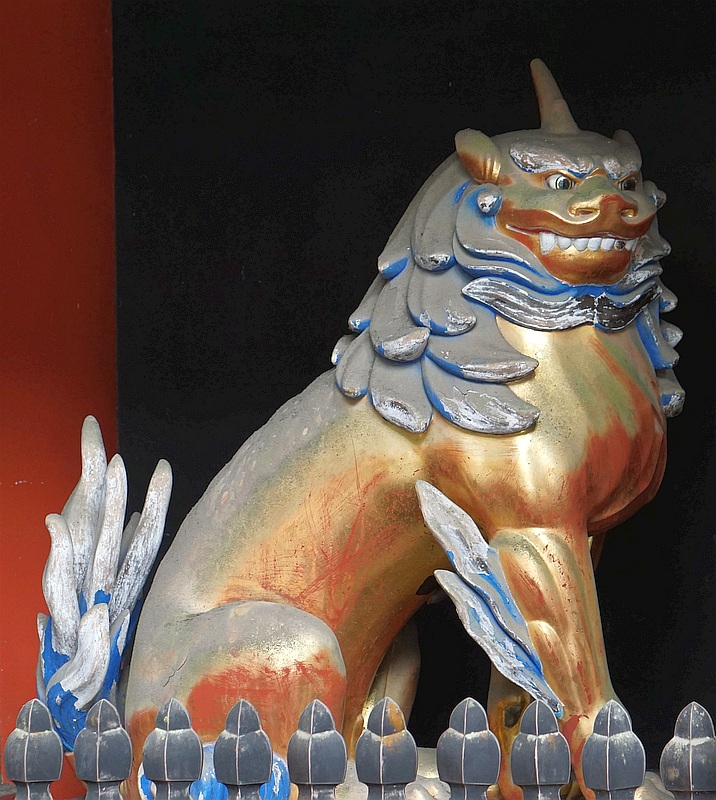
Komainu at Omote-mon, "Un" statue
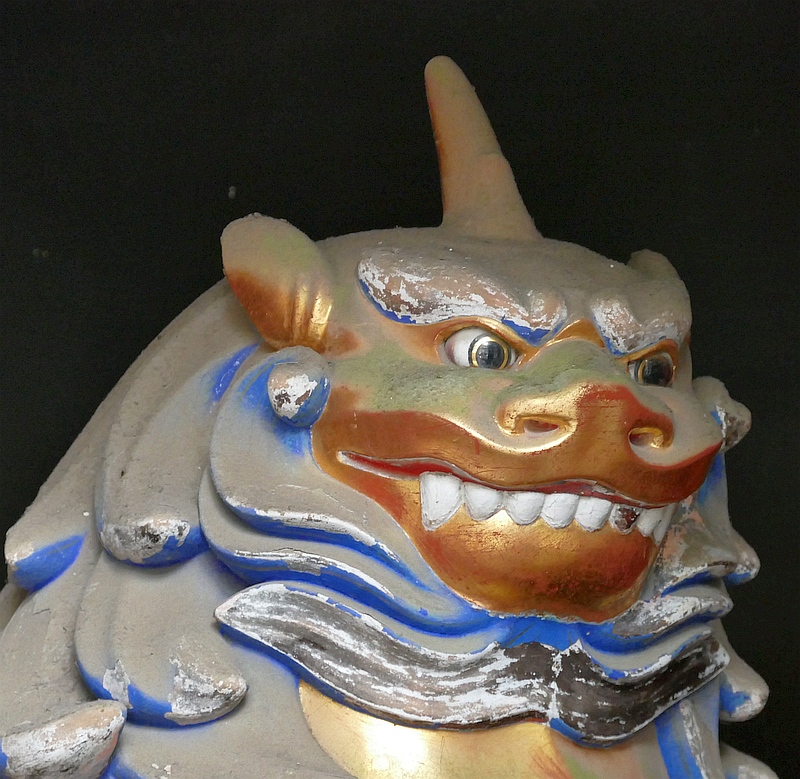
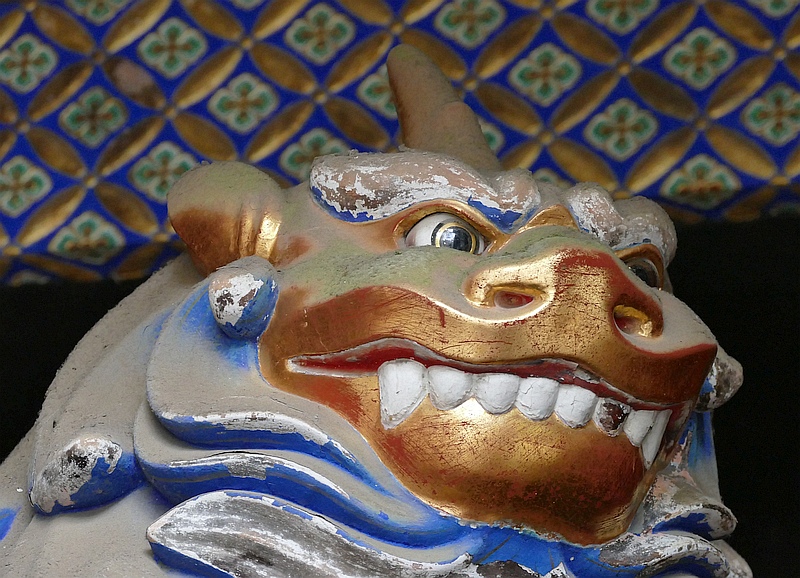
This lion/komainu pair is similar in face and overall design to other existing wooden komainu, such as the lion/domain dogs placed on either side of the Seiryouden (Seiryouden Michoudai) in the Kyoto Imperial Palace (estimated to be from the late Kamakura period) and the lion/komainu pair owned by Yasaka Shrine in Kyoto (estimated to be from the Kamakura period), but the mane and other features of the lion/komainu are slightly different.
The face is similar to the Seiryouden's lion and komainu, but it is interesting to note that while the Seiryouden lion and komainu are not so different except for the horns, this lion and komainu are more clearly designed as "different" in terms of the mane and tail shape.

 previous
 next
next