Nikko Toshogu Shrine, as a "zoo"(18)

PreviousPrevious   Index    Next

Sleeping Cat

The famous "Sleeping Cat" can be seen at the Sakashitamon gate, the entrance to the approach leading to the Okusha Shrine.
It is said that it was made by Hidari Jingoro, but is it true? Since the character of Hidari Jingoro has a strong legendary element to begin with, well, isn't there a high possibility that it is an "afterthought"?
Since it is very small, people who see it for the first time may say, "What? It is tiny and plain."
Incidentally, until the Edo period (1603-1867), only the shogun and his relatives were allowed to pass through this place, the Sakashimon Gate. In other words, even lords other than the Shogun could not enter beyond this point, and it is interesting to note that above the gate is not a dragon or a lion, but a small cat.
I have included both 2013 and 2017 photos of this as well.
2017年の訪問時点では、眠り猫のみが先に修復完成となっていて、周囲の彫刻がひび割れたまま、ネコだけがピカピカになった状態でした。
神厩舎の猿同様、この眠り猫の修復も「修復後、薄目を開けている」という声が上がり、再修復したそうです。写真は「再修復」後のものです。 At the time of our visit in 2017, only the sleeping cat had been restored to completion first, leaving the surrounding sculptures cracked and only the cat shiny.
The restoration of this sleeping cat was restored after some visitors voiced their concern that the cat's eyes were dimly open after the restoration. The photo shows it after the "restoration".
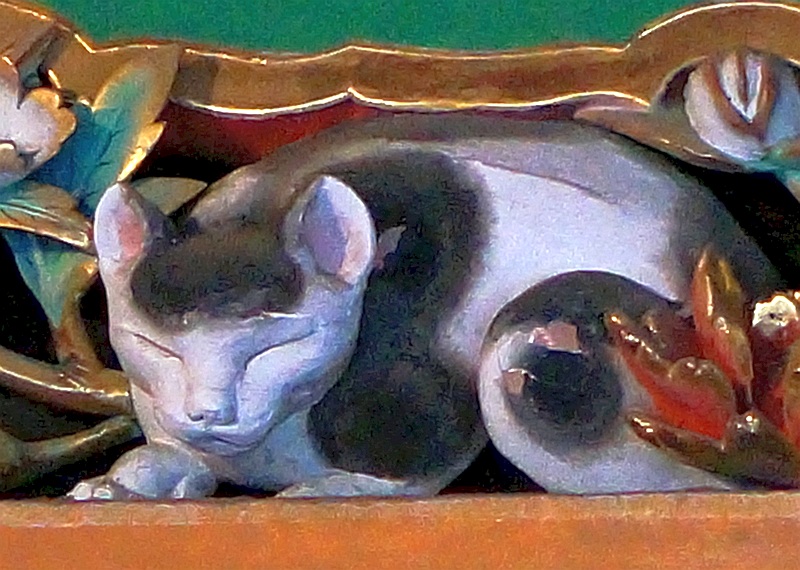
2013, before restoration
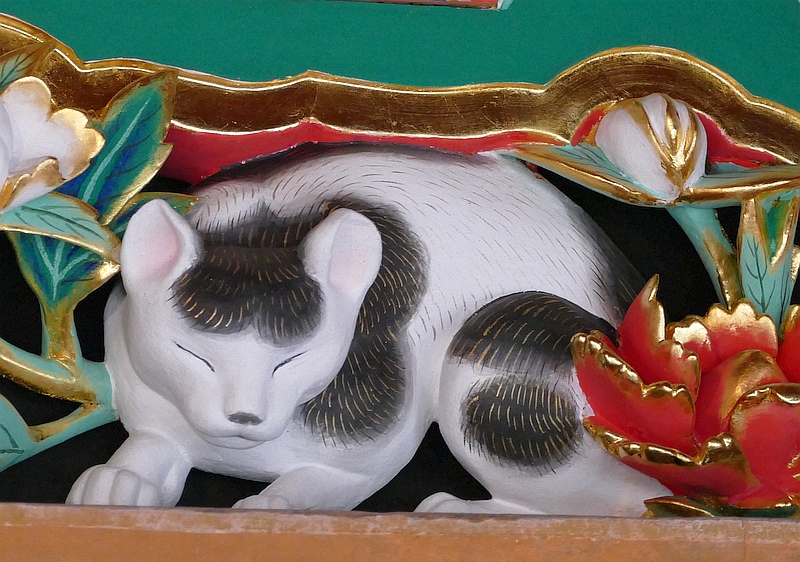


2017, after fter restoration by having the "thin eyes" closed again.
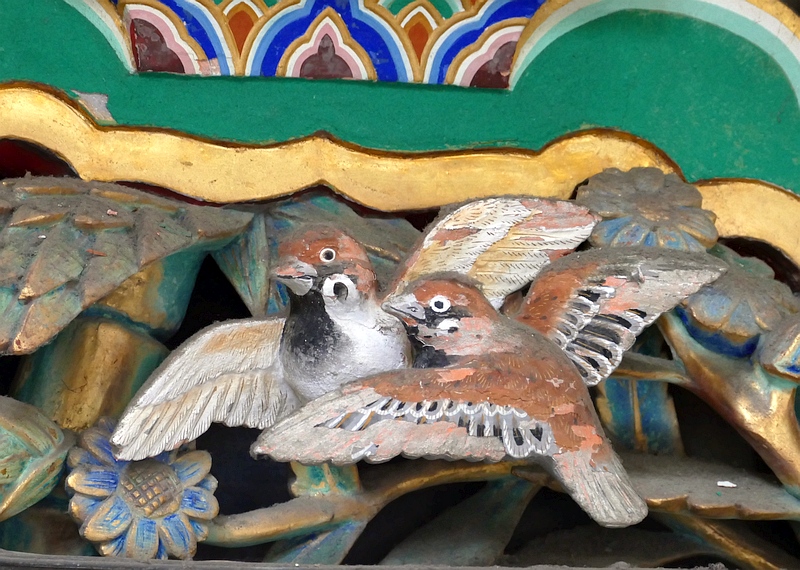


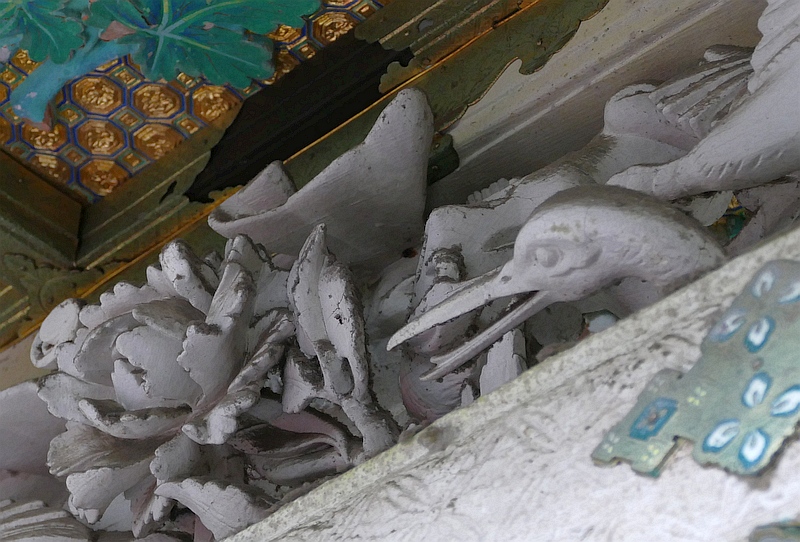
The sparrows on the back side had not yet been restored.
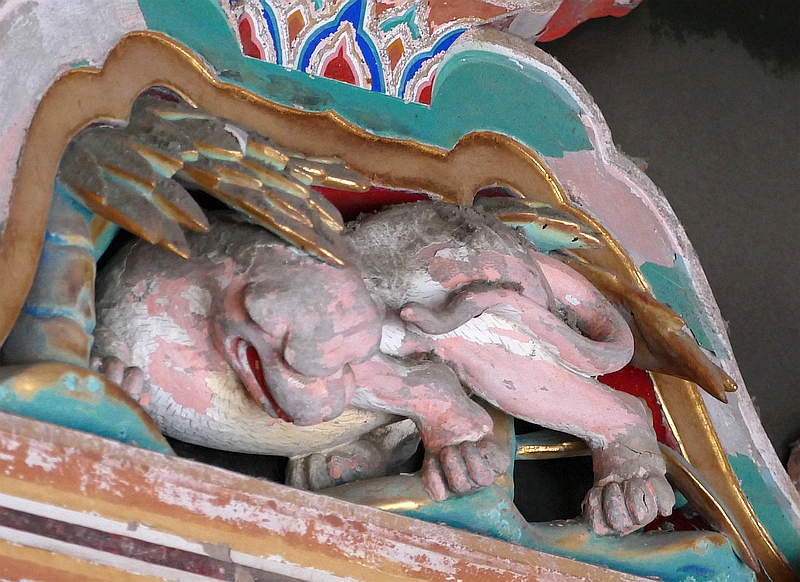


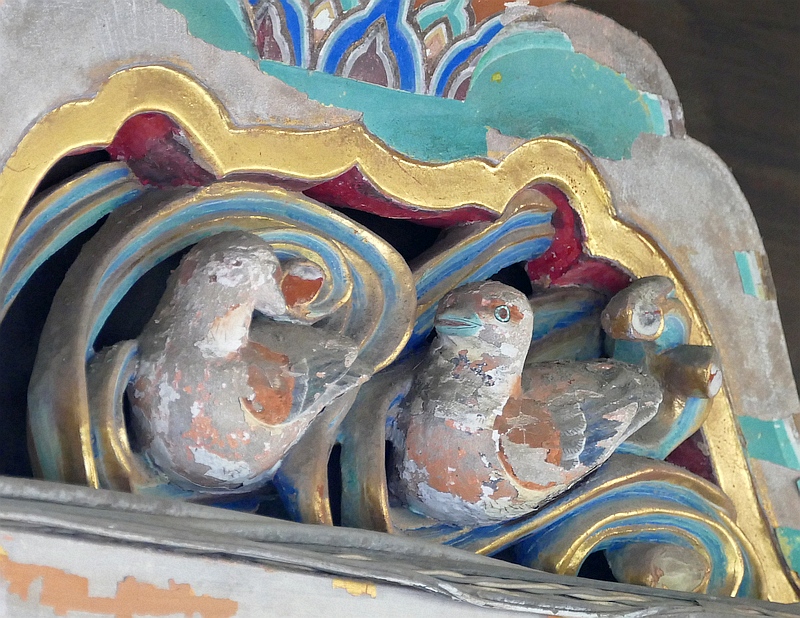
Other carvings are still peeling. They should be restored soon.


TANUPACK BOOKS

Hina Dolls of Yoshiko Suzuki and Ikuko Suzuki: A New World of Hina Dolls that Combines the Traditional Japanese Craft of "Kimekomi" with Artistry


Hina dolls are glittering dolls modeled after aristocratic couples of the olden days that are displayed during the Girls' Festival (Hinamatsuri) on March 3 in Japan. In Japan today, dolls with costumes called “Kokinbina,” which became popular after the Showa period (1926-1989), are commonly used.
But there was a doll artist who sought artistic expression in these dolls. Yoshiko Suzuki (1928-2008) is a a second-generation pupil of Goyo Hirata (1903-1981), a doll artist who was recognized as a living national treasure. In his later years, Goyo Hirata established the highly artistic Japanese doll called “Kimekomi Costume Doll."
By incorporating the traditional technique of “kimekomi costume dolls” into Hina dolls, Yoshiko Suzuki has opened up a new world of Hina dolls that are different from ordinary Hina dolls in that they are both artistic and prestigious. She founded a group of creative hina doll artists called “Kinosuzukai” with her pupils who had gathered together in admiration of Yoshiko Suzuki.
Today, her daughter-in-law, Ikuko Suzuki, is the head of the group and continues to produce Hina dolls using the kimekomi technique started by Yoshiko. These supreme dolls are made using the “Kimekomi costume doll technique,” which exists only in a few places in the world. The difference between these dolls and ordinary dolls is obvious in this photo collection.

Amazon.comTake a look at Amazon.com Click HERE!
Choose your area↓
US   UK   DE   FR   ES   IT   NL   PL   SE   JP   CA   AU


PreviousPrevious   Index    Next