Komainu (guardian dogs) on the approach to the inner sanctuary
This is such an important guardian dog in the history of komainu that no fan of komainu would be able to start without seeing it (designated as a National Important Cultural Property).
It is said to be the oldest stone-built guardian dog in eastern Japan for which the date of construction is known, but it is probably not "the oldest" because there must be older ones than this one that are not inscribed with the year of their construction.
The "oldest" stone komainu in eastern Japan for which the date of production is almost entirely known is probably the ones dedicated to the Ninomaru Tousho-sha shrine at Edo Castle in 1637, now at the Senba Toushogu shrine in Kawagoe, Saitama Prefecture.
The komainu of Kono Shrine in Kyoto is probably older than this, but while the komainu of Kono Shrine and the wooden komainu of Daiho Shrine, which is said to have been made in the Kamakura period, became famous and many copies were made, there are almost no copies of this magnificent Nikko Toshogu komainu. This is because it was located in a place where only the shoguns were allowed to enter.
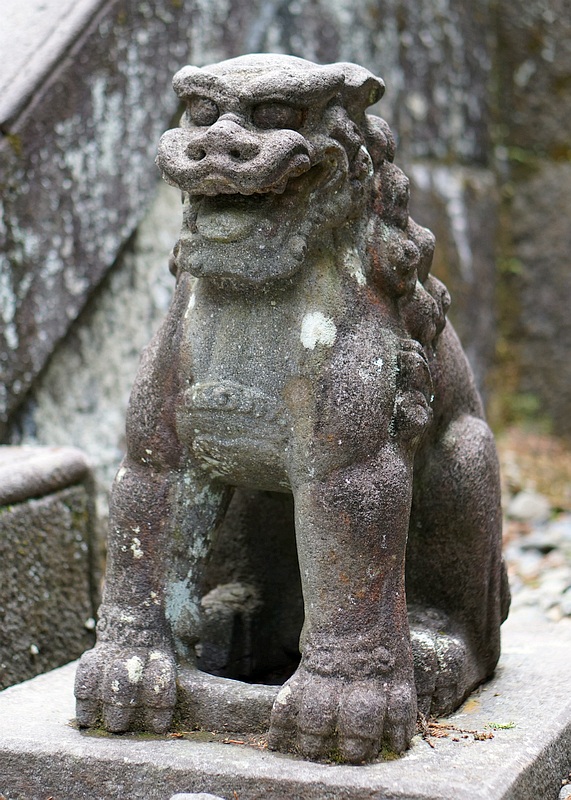
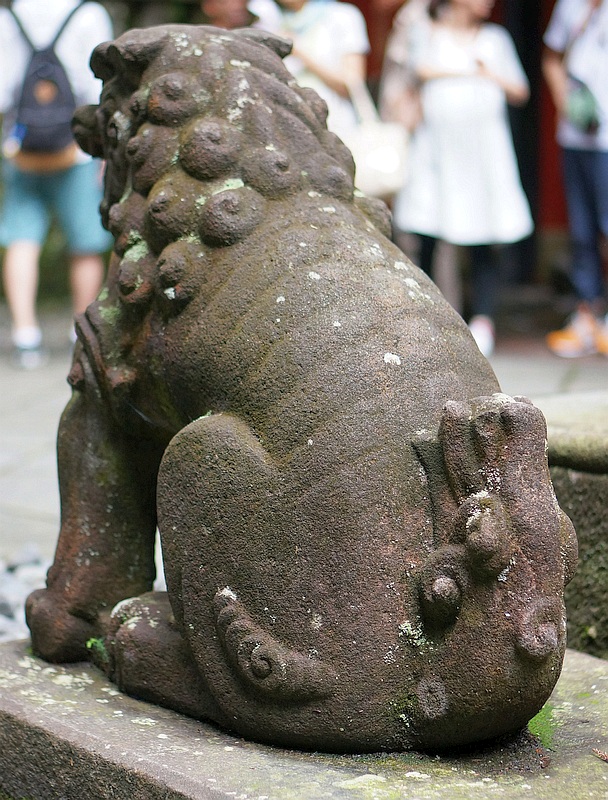
The back side of the "A" (open-mouth) image statue. The tail is distinctive.
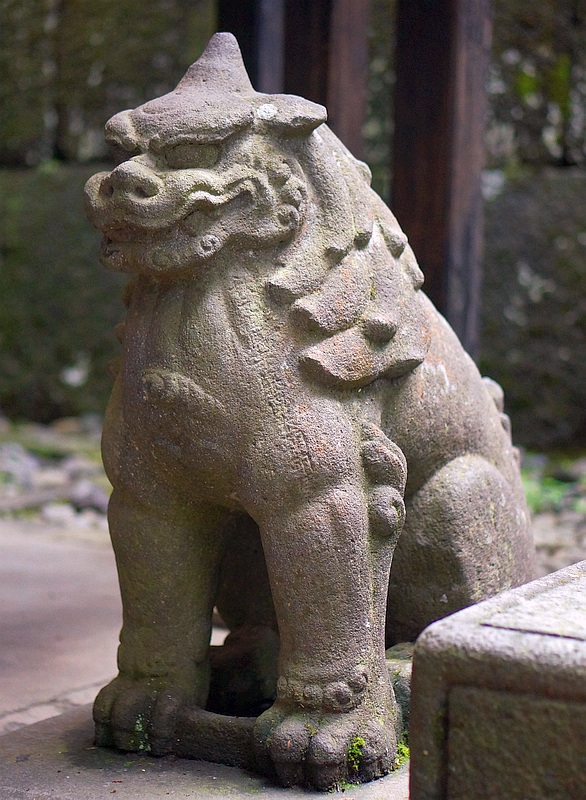
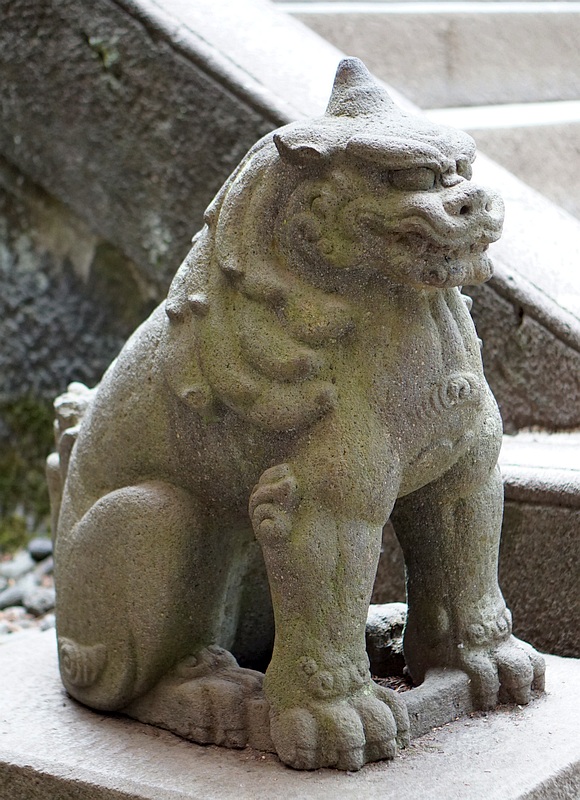
The "Un" (closed mouth) statue has a horn and follows the form of "a lion and a guardian dog" which means each is a different creature.
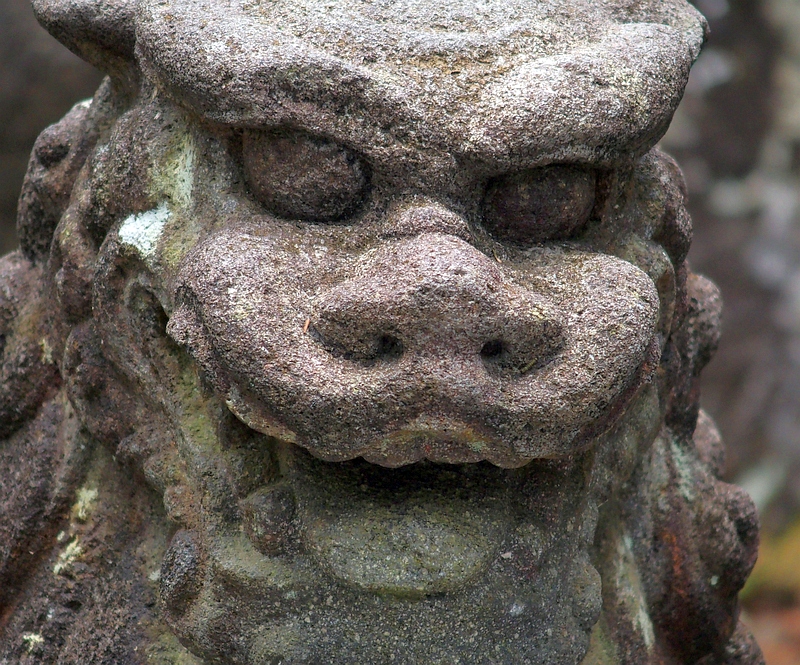
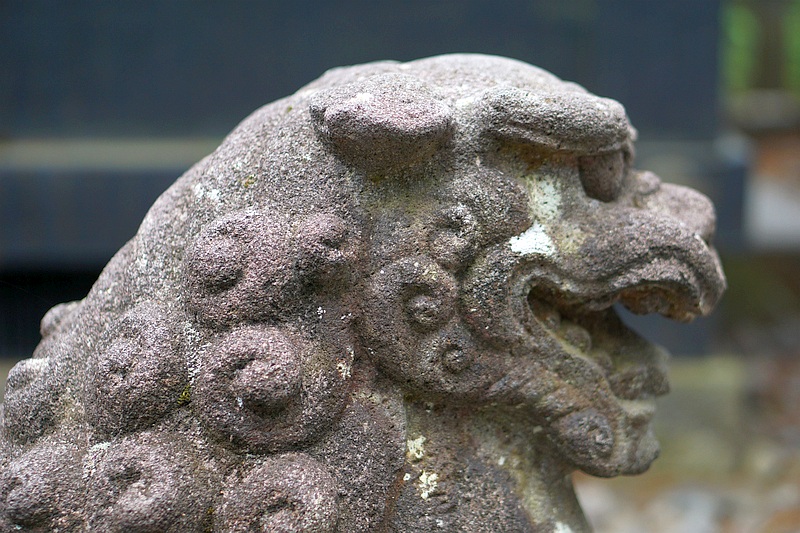
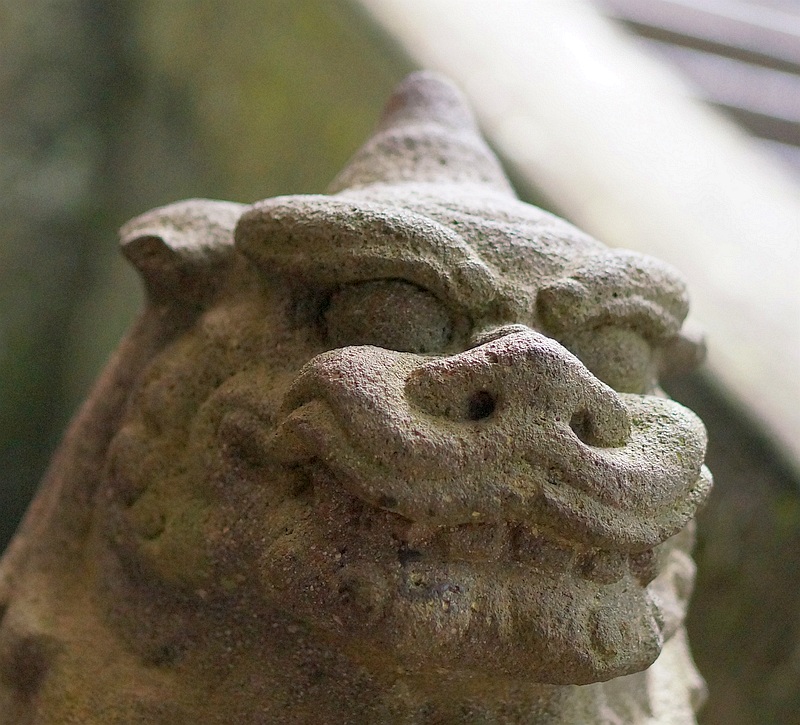
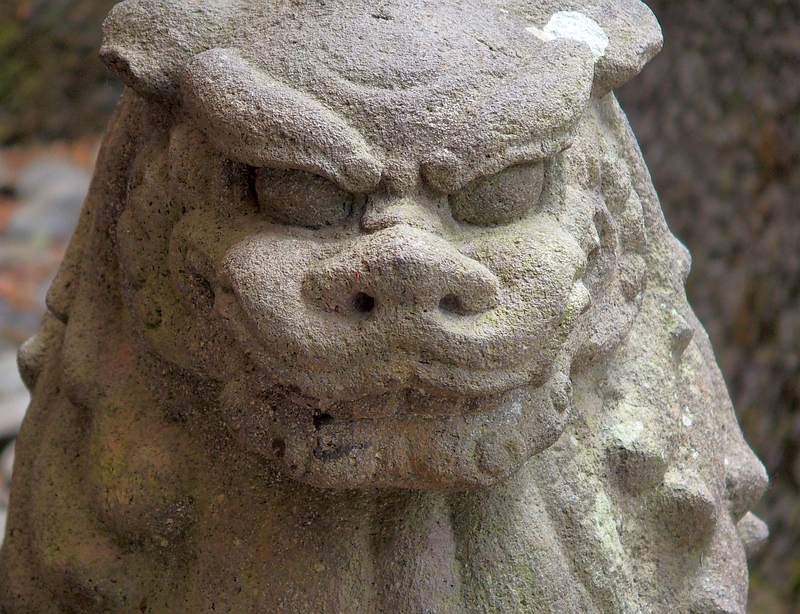
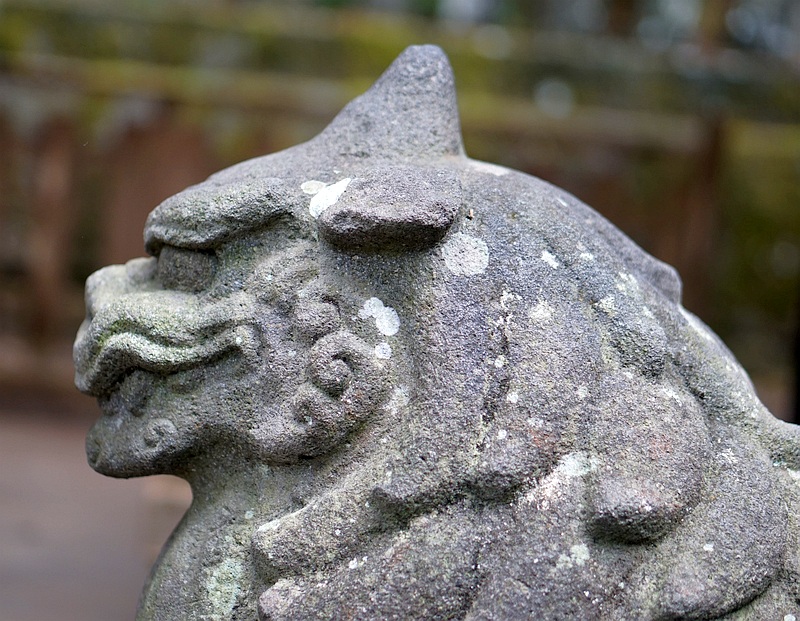
The reason why these komainu are so valuable is that while most of the decorative designs and sculptures at Toshogu Shrine represent an admiration for continental culture, in short, Chinese culture, these komainu are "Japanese" in nature.
The Japanese culture of komainu is derived from the Chinese lion statue, but the Japanese komainu has been rearranged with the asymmetrical aesthetics of lion and komainu. The shape is also quite different from that of the Chinese lion.
In this sense, this pair of komainu is unique among the Toshogu shrines. Its solitary appearance is also inspiring, as it has remained outdoors for a long time, guarding Shogun Tokugawa Ieyasu's mausoleum without being seen by the public.
Most people, however, pass by without showing any interest. What a waste!

 Previous
 Next
Next

 Take a look at Amazon.com Click HERE!